Latest





Newsletter Trade Briefing
From R2 trillion of infrastructure to digital trade: where next for UK–South Africa business?
UK–South Africa trade has reached £13.5 billion and continues to grow strongly. But the real opportunity now is not simply increasing the headline number. It is helping businesses understand where the opportunities are, how to access them and how to overcome the practical barriers that still prevent good opportunities becoming actual trade.
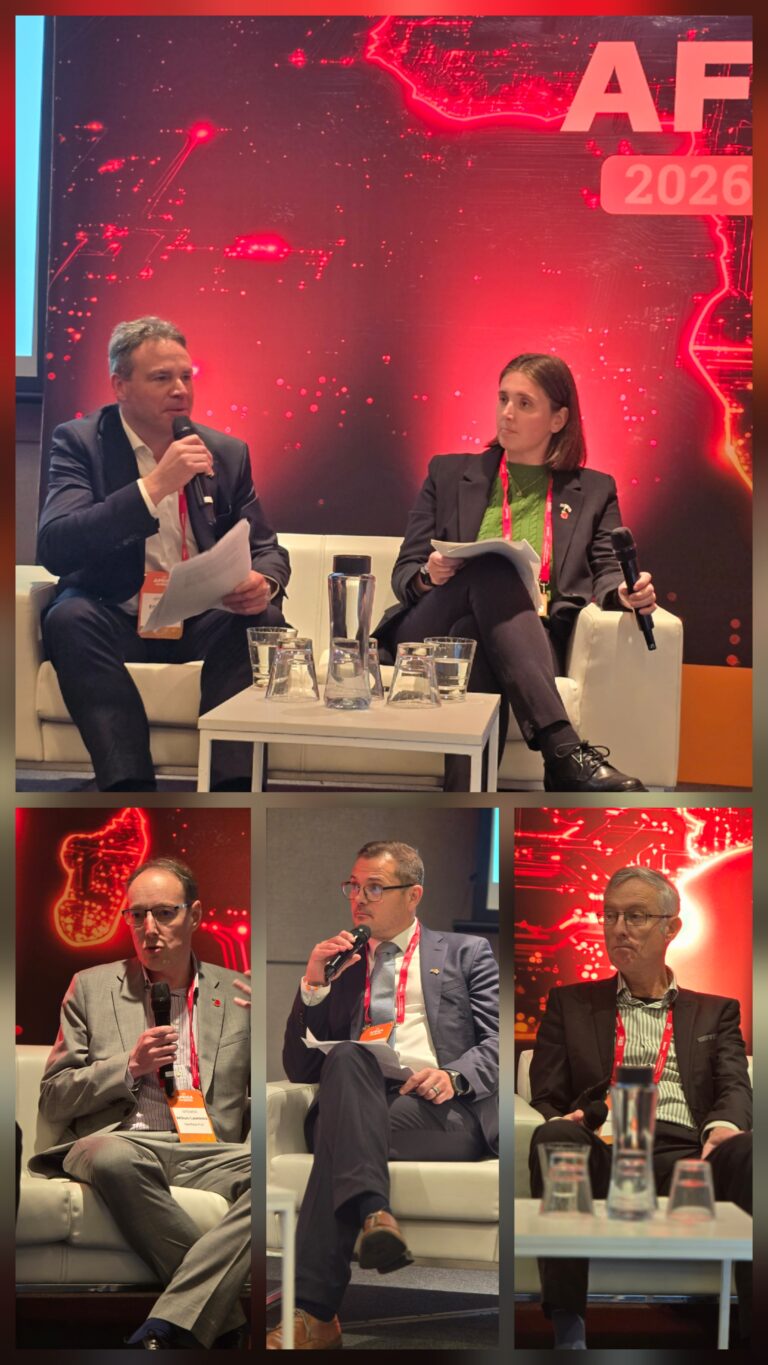
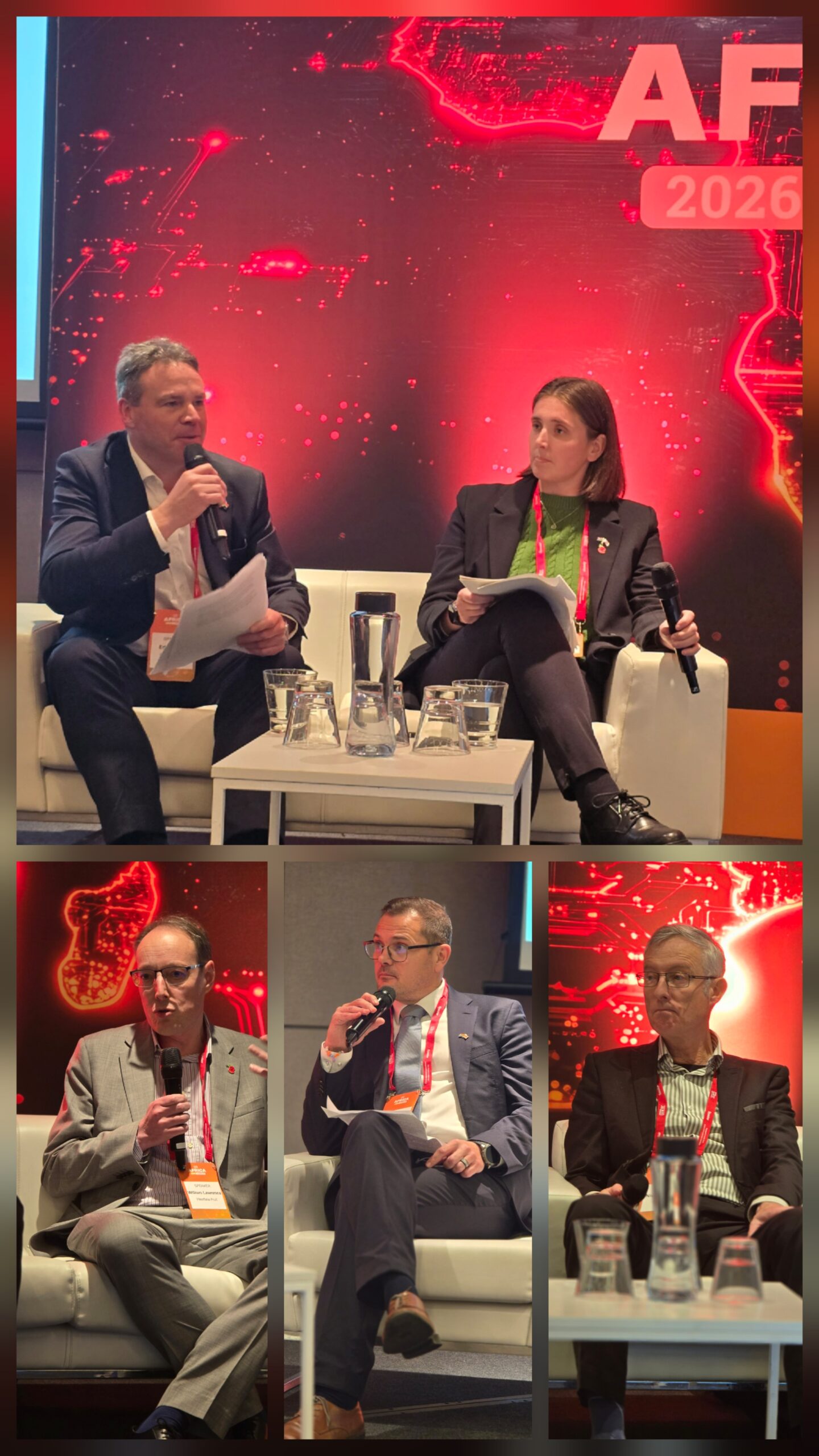
That was one of the strongest messages to emerge from the closing session at GTR Africa 2026 in London, which brought together government, business and finance to examine the next phase of the UK–South Africa economic relationship.
The discussion was moderated by South African Chamber of Commerce UK Director and Trade & Export Finance Ambassador Ed Harkins, alongside Kirsty Scotter, Trade Arrangements Lead for Southern Africa at the UK’s Foreign, Commonwealth & Development Office (FCDO); Andrew Rae, Counsellor: Bilateral Trade at the South African High Commission; Nick Primavesi, Head of International Sales at Lucy Electric; and William Lawrence, Treasurer at Westfalia Fruit.
For the Chamber, it was a particularly relevant conversation because it moved beyond the usual question of whether opportunities exist.
The more useful questions were: which sectors offer them, what is preventing businesses from capturing them, and how can government, finance and organisations such as the Chamber help turn opportunity into actual business?
UK–South Africa trade at a glance
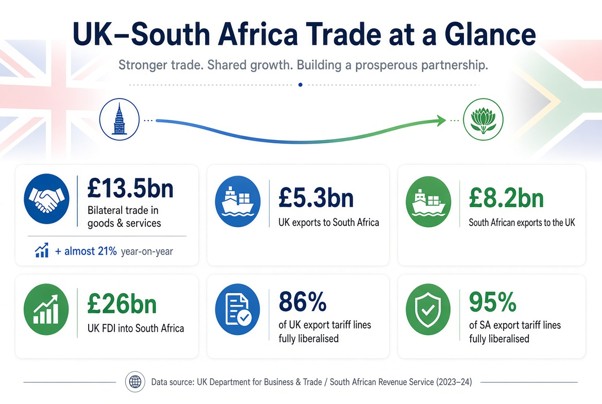
Ed Harkins opened the discussion with the latest figures, putting total bilateral trade in goods and services at £13.5 billion in the 12 months to June 2026, almost 21% higher than a year earlier.
UK exports to South Africa stood at approximately £5.3 billion, while South African exports to the UK reached approximately £8.2 billion. UK foreign direct investment into South Africa was also cited at approximately £26 billion at the end of 2024.
Those figures provide an important starting point. This is already a substantial economic relationship.
The question is how much further it can go.
UK–South Africa trade at a glance
£13.5bn bilateral goods and services trade
Almost 21% year-on-year growth
£5.3bn UK exports to South Africa
£8.2bn South African exports to the UK
£26bn UK FDI into South Africa
86% of UK export tariff lines fully liberalised under the EPA
95% of South African export tariff lines fully liberalised
Are businesses fully using the agreement we already have?
The UK-SACUM Economic Partnership Agreement has now been operating for more than five years.
FCDO's Kirsty Scotter made an important clarification: despite the different terminology, the EPA is a free trade agreement, although one deliberately structured with a development focus and asymmetric provisions.
The level of tariff liberalisation is already considerable.
Some 86% of tariff lines for UK exports are fully liberalised, rising to 95% for South African exports. Preference utilisation is already close to 100% in several important South African export sectors, including cars, grapes, wine and citrus.
But one figure was particularly interesting.
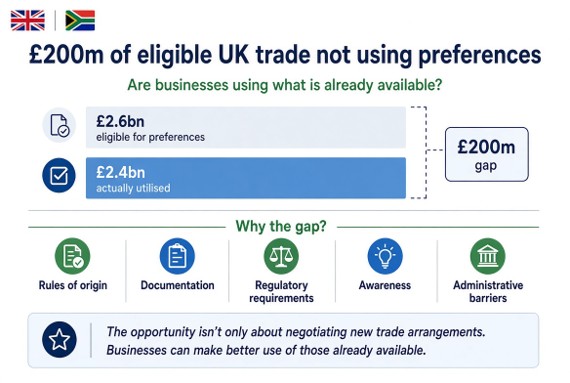
Approximately £2.6 billion of UK goods were eligible for preferences under the agreement, while £2.4 billion actually used those preferences.
£2.6bn eligible → £2.4bn utilised → £200m gap
That suggests there is already value available to businesses without negotiating another agreement or creating another trade programme.
The challenge is understanding how to use what already exists.
Kirsty highlighted rules of origin, regulatory and administrative requirements and other non-tariff barriers as continuing obstacles.
She also pointed to some of the more flexible rules-of-origin provisions available under the agreement, including circumstances where European inputs can be accumulated before goods qualify for preferential treatment as UK-originating products.
For businesses operating international supply chains, provisions such as these can materially change the economics of exporting.
It also illustrates why the Chamber believes the next stage needs to become increasingly sector-specific. Businesses need to understand not just that an agreement exists, but how it applies to their particular product, supply chain and market.
Infrastructure: a very substantial opportunity
Perhaps the largest commercial opportunity discussed was South Africa's infrastructure programme.
Andrew Rae described a pipeline spanning energy, renewable energy, electricity transmission, transport, water infrastructure, human settlements and urban regeneration.
And the scale is significant.
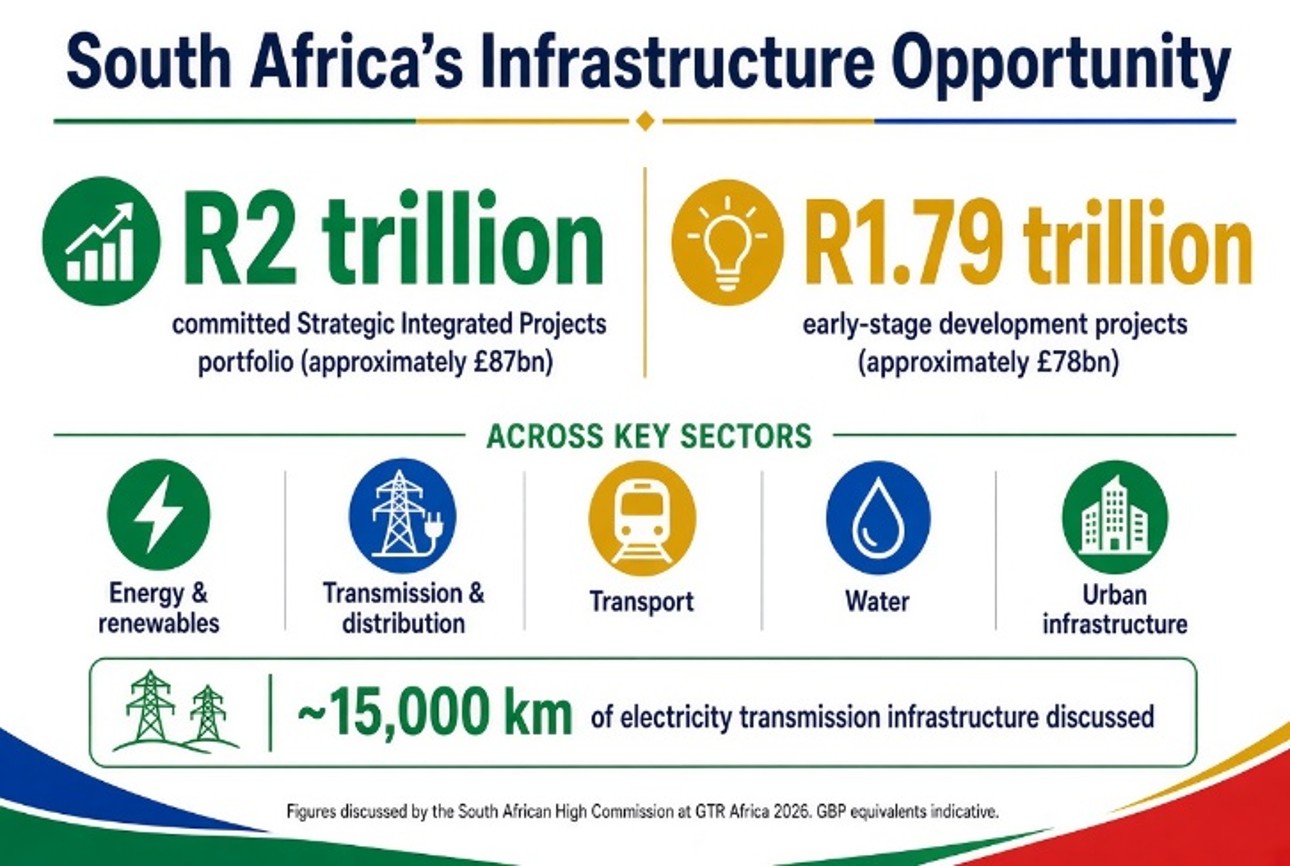
The Strategic Integrated Projects portfolio discussed by Andrew includes approximately R2 trillion (around £87 billion) of committed projects, alongside approximately R1.79 trillion (around £78 billion) of early-stage development projects.*
Energy infrastructure is particularly important.
South Africa's historic electricity system developed around coal generation concentrated in the east of the country. Renewable resources, particularly wind and solar, are increasingly located elsewhere.
Connecting that new generation to the areas where electricity is required means a substantial expansion of the transmission network.
The panel discussed a requirement of approximately 15,000 kilometres of additional transmission infrastructure.
For UK manufacturers, engineering companies, contractors, technology suppliers, advisers and financiers, these are potentially significant opportunities.
But the panel also identified an important qualification:
Having an infrastructure pipeline is not the same as having bankable projects.
Making projects bankable
Lucy Electric's Nick Primavesi brought the issue into sharp focus.
The company manufactures electrical switchgear in the UK while maintaining an assembly operation in Johannesburg and sales operations in Cape Town. It therefore sees the market both as a British exporter and as a business operating within South Africa.
Nick distinguished between different levels of electricity infrastructure.
Major generation and transmission projects are relatively well understood by commercial financiers. Their scale, procurement structures and financing requirements make them more conventional infrastructure propositions.
Electricity distribution can be much more difficult.
A project may involve infrastructure serving a municipality, hospital, university or local community. The requirement clearly exists, but financing smaller distribution projects can be substantially more difficult.
That raises an important question for companies seeking opportunities in the sector:
How do we take a necessary infrastructure project and turn it into an investable project?
Andrew made a similar point from the South African government perspective. Increasing effort is going into project preparation and de-risking so that infrastructure can attract commercial capital.
The answer is likely to require several parts of the financing ecosystem working together:
South African infrastructure requirement
↓
Project preparation and de-risking
↓
Commercial lenders + DBSA + BII + ECAs/UKEF + private capital
↓
UK and South African contractors, manufacturers and advisers
↓
Funded and deliverable project
Andrew specifically referenced the Development Bank of Southern Africa and British International Investment as institutions already contributing to the development of investable projects.
This could represent an important area for greater UK–South Africa collaboration.
And importantly, the opportunity is not confined to the companies actually constructing infrastructure. It encompasses equipment manufacturers, engineering businesses, project developers, banks, insurers, legal advisers, consultants and other specialist professional services.
Lucy Electric: South Africa as more than an export market
Lucy Electric also provides an interesting example of another theme emerging from the discussion.
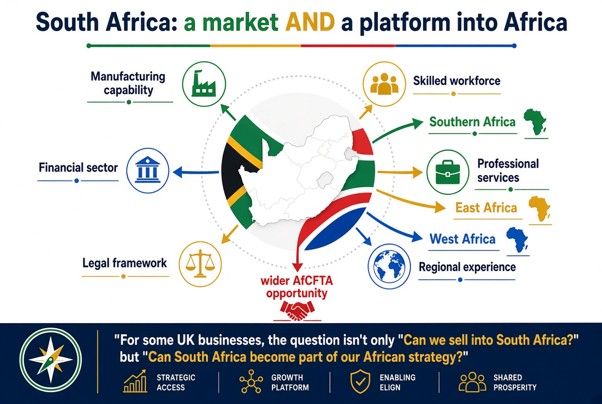
South Africa is important to the company as a domestic market, but it is also part of its wider African platform.
The business combines:
UK manufacturing → South African assembly → local sales → skills and training → wider African markets
Nick highlighted South Africa's manufacturing capabilities, education and skills base and, importantly, its sophisticated financial community and appetite for understanding and financing risk elsewhere in Africa.
That changes the proposition.
For some British businesses, the question should not simply be:
"Can we export to South Africa?"
A potentially more interesting question is:
"Could South Africa form part of our wider African strategy?"
The AfCFTA opportunity
Andrew Rae developed that argument further through the African Continental Free Trade Area.
As AfCFTA develops and tariff barriers between participating African economies are progressively addressed, the rationale for establishing manufacturing, distribution or operational capacity in a major African economy potentially becomes much stronger.
South Africa brings an established financial system, substantial industrial capacity, professional services, universities and infrastructure alongside access to a much larger developing continental market.
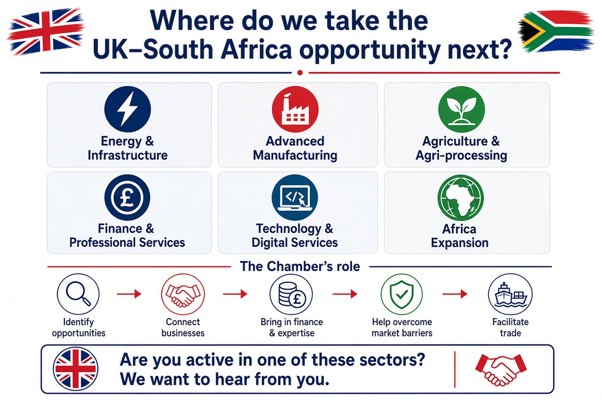
Based on this discussion, several areas stand out.
⚡ Energy and infrastructure
Electricity generation, transmission and distribution; renewable energy; water; transport; engineering; specialist equipment; project preparation and infrastructure finance.
🏭 Advanced manufacturing
UK equipment, technology and engineering supporting South African industrial development, alongside opportunities to develop higher-value South African manufactured exports.
🌱 Agriculture and agri-processing
Building on established strengths in fresh produce, wine and agricultural products while exploring technology, processing, supply-chain and specialist financing opportunities.
💷 Finance and professional services
Trade finance, export finance, project finance, FX and treasury management, insurance, legal, accounting, engineering and project advisory services.
💻 Technology and digital services
Potentially one of the more accessible areas for SMEs, allowing businesses to develop bilateral trade without the capital requirements associated with physical products.
🌍 South Africa as a base for African expansion
Helping UK businesses determine when a South African operation could provide the right platform for wider African growth, while supporting South African companies seeking to use the UK as a base for international expansion.
From conversation to commerce
The strongest conclusion from GTR Africa was not simply that UK–South Africa trade is growing.
It is that many of the ingredients required for the next stage are already there.
A functioning trade agreement.
£13.5 billion of existing bilateral trade.
A substantial South African infrastructure pipeline.
UK and South African manufacturing and technical expertise.
Trade, export and development finance capacity.
Growing opportunities in services and technology.
And, potentially, access to a much larger African market.
The missing piece is often connecting these elements effectively enough to turn an opportunity into a transaction.
That is where we believe the South African Chamber of Commerce UK can make a practical contribution.
Over the coming months, we intend to look more closely at the sectors identified above and work with businesses, government, financial institutions and professional advisers on both sides to understand where the strongest two-way opportunities actually lie.
Not simply "How do we increase trade?"
But:
Which sectors? Which projects? Which businesses? What finance is available? What is stopping the transaction? And who needs to be brought together to make it happen?
If your organisation is already trading between South Africa and the UK, is exploring either market, has an infrastructure or investment opportunity, or can contribute finance, expertise or market access, we would like to hear from you.
Your experience will also help inform where the Chamber focuses its trade activities in the year ahead.